István Tarlós, the governing Fidesz party’s brand-new mayor of Budapest, announced plans for a swift and wide-ranging review of private companies’ ownership contracts in city utilities.

Keresés
István Tarlós, the governing Fidesz party’s brand-new mayor of Budapest, announced plans for a swift and wide-ranging review of private companies’ ownership contracts in city utilities.
Unexpected crises are moments that can make or break political leaders. They either flounder around for solutions or rise to the occasion.
On October 4, a waste reservoir at an aluminum plant burst its banks, unleashing some 700,000 cubic meters of red sludge. The government has responded to the crisis in the most popular way possible.
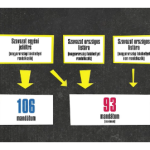
Fidesz, which leads the strongest government since 1990, has reached all of its political goals by extending its power over most municipalities.
Political Capital's analysis on attitudes toward migrants in Hungary, Bulgaria, Romania, Slovakia, Croatia, the Czech Republic, Slovenia and Poland.
Barring a catastrophe on the scale of an extraterrestrial invasion, the governing Fidesz party will demolish all comers in the 3 October municipal elections.
Fidesz’s changes to the election law have made it hard for politicians to run for Budapest mayor.
Although Hungary currently has no urgent need for outside financing, the IMF loan served as a safety net should the country find itself in a tight spot.
Political analysts, researchers and members of civil organisations in Slovakia and Hungary have created an open network to stimulate dialogue on issues that affect the entire Visegrad region.
The biggest political calamities are sometimes the consequence of the most obvious political mistakes. This may be the case with the new Declaration of National Cooperation.
Economist: „A commendably thorough paper from Political Capital, a Budapest-based research outfit, highlights the mess the new government has inherited and the unrealistic nature of its promises"
Demand for Right-Wing Extremism (DEREX) Index