While populist radical right parties in Europe and their connections to Russia are frequently discussed, much less attention is dedicated to the radical left side of the spectrum. This study tries to fill this gap by providing an overview of the political successes of radical left parties.
Radicalism and Extremism60 Post
Radicalism and Extremism
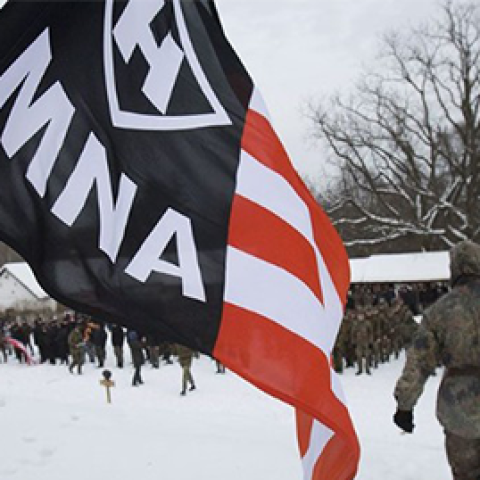
The recent murder of a Hungarian police officer by a far-right paramilitary leader in Hungary shed light on the continuing radicalization and destabilization of the region by Russia.
Political Capital has regularly published its Demand for Right-Wing Extremist (DEREX) index, which is based on the European Social Survey's bi-yearly updated database.
Country report on xenophobia and radical nationalism in Hungary for 2015 by dr. Ildikó Barna, associate professor at Eötvös Lóránd University, and Political Capital’s analyst Bulcsú Hunyadi.
Political Capital’s most recent study explores the topic of Russian soft power in Hungary, Slovakia, the Czech Republic, Poland and Austria.
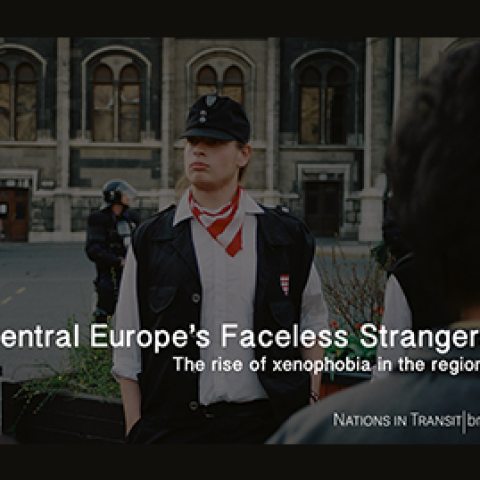
The brief takes a closer look at xenophobic sentiment in Central Europe, discussing the reasons behind historically high levels, as well as its increase with the European refugee crisis.
Short English summary of a project jointly executed by Political Capital Institute, Action and Protection Foundation and media researcher Gábor Bernáth, and supported by the Norwegian NGO Fund. Within the framework of the project we examined what possibilities there are to encourage non-violent and
Political Capital Institute has decided to launch a series of publications in order to analyze the pro-Russian standpoint and behavior of far-right actors in various member states more deeply. The first four elements of the series deal with Hungary, Slovakia, France and Greece.
The Kremlin connections of the Slovak far-right
Country report on xenophobia and radical nationalism in Hungary for the time period between January-June 2015. In the study, dr. Ildikó Barna, associate professor at Eötvös Lóránd University, and Political Capital’s analyst Bulcsú Hunyadi summarise the key events and developments related to radicali
This page presents the results of a two-years-long research project, which focused on the attitudes towards political violence in online and offline context.
The more successful populist, Euro-reject parties in the last few years have shifted their platform’s central pillar from anti-immigration in 2009’s EP election to anti-EU in 2014’s EP election.