Despite the extensive knowledge about the harmful effects of having CT beliefs, the reduction of CT beliefs with experimental methods is a relatively neglected topic of scientific investigation.

Despite the extensive knowledge about the harmful effects of having CT beliefs, the reduction of CT beliefs with experimental methods is a relatively neglected topic of scientific investigation.

The one and a half year-long political campaign, which has been the most expensive one ever in Hungary, was not enough for a valid referendum. The 40% voter turnout shows that the campaign considerably underperformed the governing party’s expectations, the representatives of which had been talking a
The purpose of this study is to analyse the stance of civic and political actors in the Visegrád countries on the Transatlantic Trade and Investment Partnership (TTIP).
Political Capital’s most recent study explores the topic of Russian soft power in Hungary, Slovakia, the Czech Republic, Poland and Austria.
With the anti-quota referendum, one of the gravest dangers of illiberal politics seems to be materialising: the leadership’s reaction is making the tools of direct democracy (besides those of representative democracy) meaningless
Despite the fact that, based on the latest party preference survey, support for Fidesz has not increased since April, government politicians consider the government’s antiimmigrant campaign a re
This report outlines migration trends and the political dynamics on this issue in Hungary
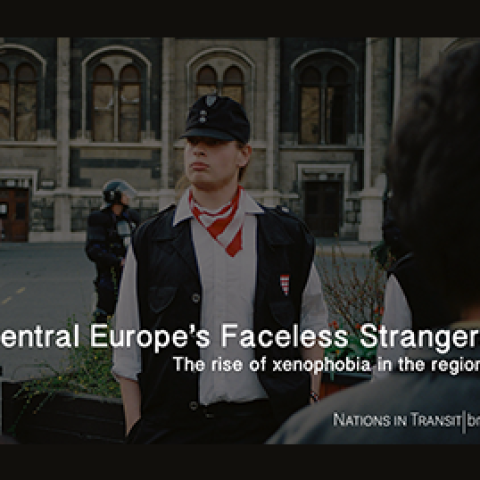
The brief takes a closer look at xenophobic sentiment in Central Europe, discussing the reasons behind historically high levels, as well as its increase with the European refugee crisis.
Short English summary of a project jointly executed by Political Capital Institute, Action and Protection Foundation and media researcher Gábor Bernáth, and supported by the Norwegian NGO Fund. Within the framework of the project we examined what possibilities there are to encourage non-violent and
Our studies on the domestic aspects of the refugee crisis summarise and evaluate data on migration, analyse its political consequences, and offer a regional outlook on V4 countries.

The Prague summit of the leaders of the Visegrad countries on 15 February and the meeting of the European Council on the 18-19 put the coordinated stance of the V4-group into the spotlight again.
Study on the Orbán Government’s rhetoric and policy measures with regard to refugee, asylum and migration issues