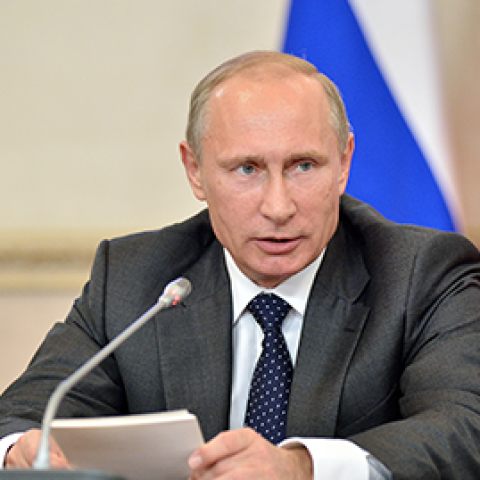
Flash Report on Putin’s visit.

Flash Report on Putin’s visit.
The year-long regional research project commissioned by Political Capital, covering Austria, the Czech Republic, Slovakia, Hungary, and Poland focuses mainly on the violent ramifications of Russia’s regional influence.
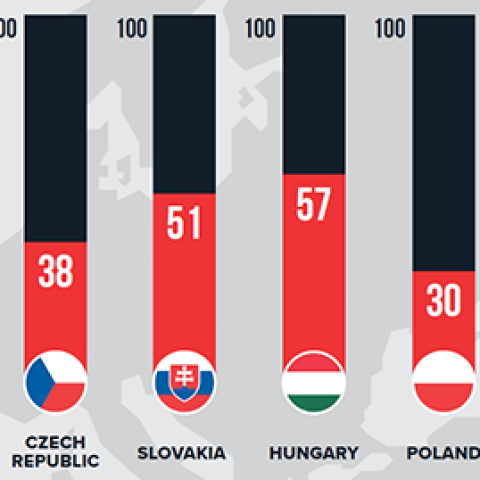
How vulnerable are the Visegrad four societies to subversive foreign influence?

Our interview with Jānis Bērziņš, the director of the Center for Security and Strategic Research in Riga.
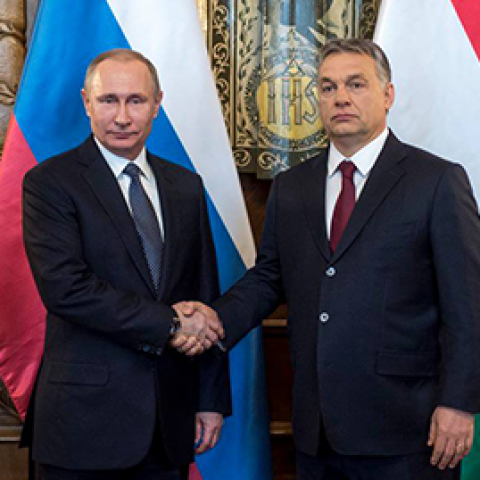
Russian President Vladimir Putin’s visit on 2 February to Budapest indicates there is a strategic alliance between the two sides, which aims to strengthen „internal opposition” within the European Union trying to cancel sanctions against Russia and weaken European integration.
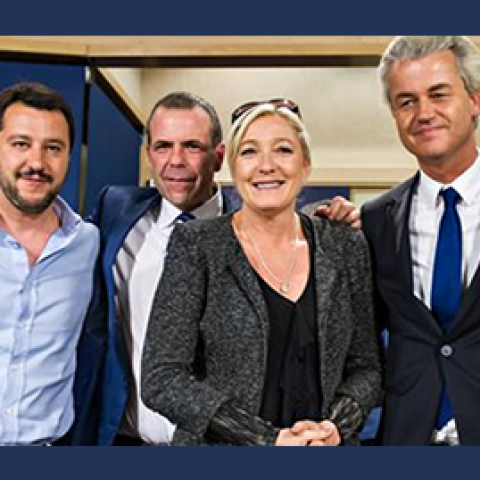
The joint study of the Washington-based American Enterprise Institute and Political Capital examined the driving forces behind European populism and Russian influence exerted on the main political forces.
V4 countries are among the main targets of the Kremlin's disinformation campaigns. To demonstrate this, Political Capital, Globsec Policy Institute and the European Values Think Tank launched the bi-weekly Kremlin Watch, which brings the public's attention to Russian propaganda.
While populist radical right parties in Europe and their connections to Russia are frequently discussed, much less attention is dedicated to the radical left side of the spectrum. This study tries to fill this gap by providing an overview of the political successes of radical left parties.
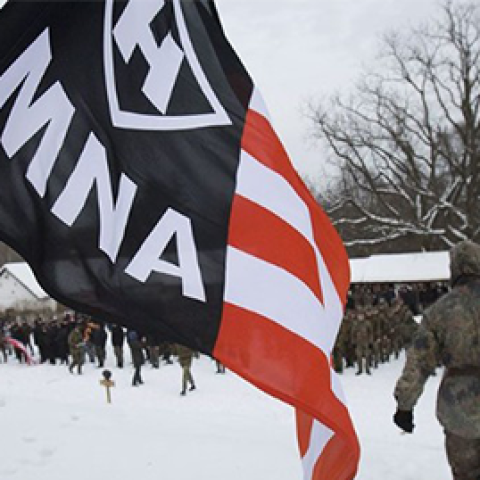
The recent murder of a Hungarian police officer by a far-right paramilitary leader in Hungary shed light on the continuing radicalization and destabilization of the region by Russia.
Political Capital’s most recent study explores the topic of Russian soft power in Hungary, Slovakia, the Czech Republic, Poland and Austria.

The Prague summit of the leaders of the Visegrad countries on 15 February and the meeting of the European Council on the 18-19 put the coordinated stance of the V4-group into the spotlight again.
Political Capital Institute has decided to launch a series of publications in order to analyze the pro-Russian standpoint and behavior of far-right actors in various member states more deeply. The first four elements of the series deal with Hungary, Slovakia, France and Greece.